Samantabhadra Bodhisattva’s Sacred Birthday:Practising the Ten Great Vows
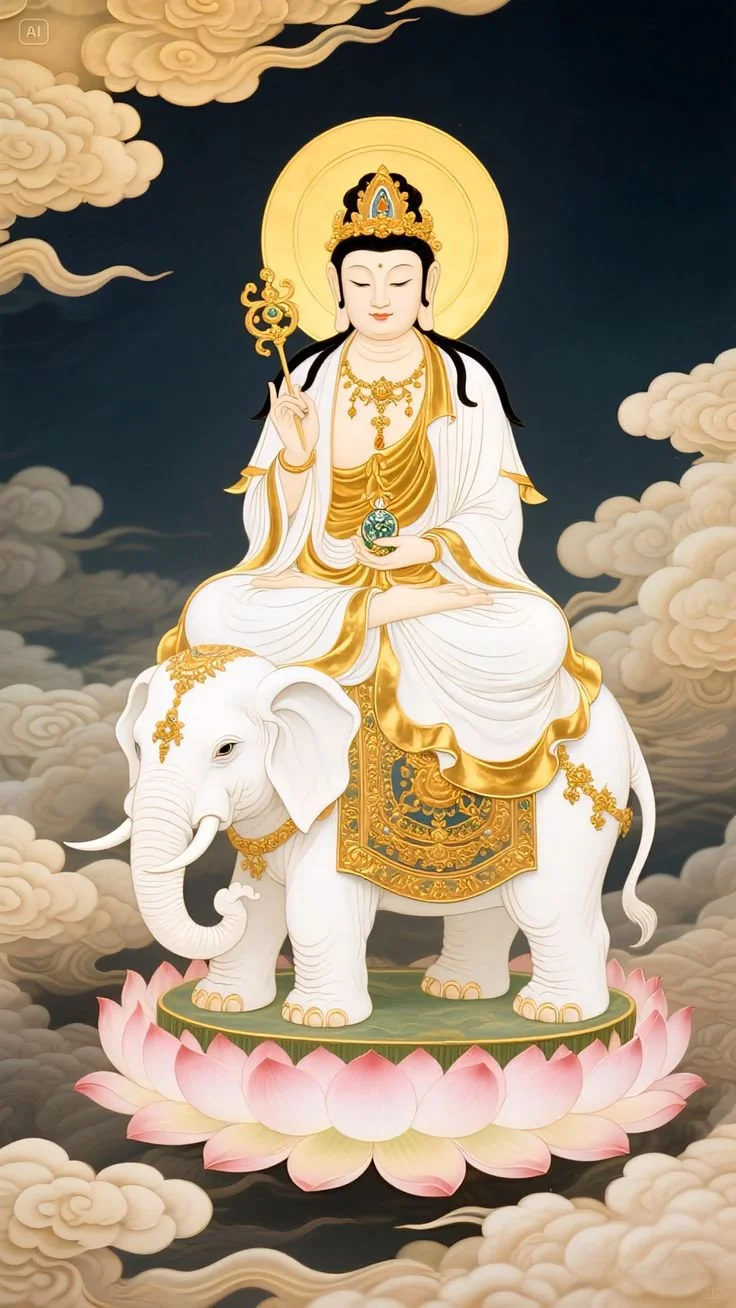
On the 21st day of the second lunar month, we celebrate the sacred birthday of Samantabhadra Bodhisattva (普贤菩萨), one of the Four Great Bodhisattvas in Chinese Buddhism, together with Guanyin, Manjushri, and Ksitigarbha (Earth Store).
Samantabhadra Bodhisattva embodies great practice and vows (行愿). Vows without practice remain empty; for Bodhisattvas, what matters is not only making vows, but truly carrying them out and integrating the teachings into daily life. He is especially renowned for his Ten Great Practices and Vows, which constitute a comprehensive framework for advanced Bodhisattva practice. It is said that all Buddhas and Bodhisattvas arise from the Ten Great Vows of Samantabhadra.
Samantabhadra complements Manjushri Bodhisattva (文殊菩萨), who symbolises wisdom. Together, they serve as the two attendant Bodhisattvas of Vairocana Buddha (毗卢遮那佛), and are collectively known as the Huayan (Flower Adornment) Trinity (华严三圣).
In the final chapter of the Flower Adornment Sutra - the Practices and Vows of Bodhisattva Samantabhadra, Bodhisattva Samantabhadra, together with Manjushri, exhorts the Bodhisattvas of the Flower Treasury World to dedicate their merits and aspire for rebirth in Amitabha Buddha’s Pure Land—the swift and perfect path toward the fulfilment of Buddhahood.
The name Samantabhadra carries profound meaning:
“Samanta” (普) means universal, all-pervading
“Bhadra” (贤) means virtuous, noble, or worthy
Together, the name expresses the ideal of universal virtue manifested through action.
Samantabhadra is honoured as the King of Great Vows, reminding us that true spiritual practice is not merely about making aspirations, but about living them through action. He is often depicted riding a six-tusked white elephant, symbolising steadfast strength, great resolve, and the power of determined practice.
The Ten Great Practices & Vows of Samantabhadra are:
To pay homage to all Buddhas
To praise the Tathāgata
To extensively cultivate making offerings
To repent of karmic obstacles
To rejoice in others’ merits
To request the turning of the Dharma wheel
To request the Buddhas to remain in the world
To constantly follow the Buddha’s teachings
To constantly accord with living beings
To universally transfer all merit
These Ten Great Vows serve not only as a doctrinal framework, but also as a practical guide for ethical living and spiritual cultivation. They encourage practitioners to extend their aspirations beyond personal liberation, cultivating a vast and inclusive compassion that embraces all sentient beings.
Importantly, these vows are not confined to abstract ideals. Rather, they are to be embodied in the simplicity of everyday conduct. Acts of respect, generosity, self-reflection, and kindness become the living expression of these profound teachings. In this way, the path of Samantabhadra transforms ordinary life into a field of continuous practice.
From Aspiration to Embodiment
On this sacred occasion, the commemoration of Samantabhadra Bodhisattva invites reflection on the relationship between intention and action. It reminds practitioners that the essence of the Dharma lies not solely in understanding, but in embodiment.
May we, inspired by the Ten Great Vows, each give rise to wholesome aspirations and bring them into action—allowing the Dharma to manifest not only in thought, but in the way we live, speak, and engage with the world.
Shifu Shengchi also expounded a series of talks on the Ten Great Practices and Vows of Bodhisattva Samantabhadra, you can view here:
Namo Samantabhadra Bodhisattva
Namo Amitabha Buddha